
Monitorowanie snu
Zaktualizowano25 czerwca 2026
Aidlab śledzi sen na podstawie sygnałów z klatki piersiowej — tam, gdzie oddech i praca serca są najlepiej widoczne i mniej podatne na zakłócenia niż na nadgarstku.
Jak działa monitorowanie snu
Aidlab automatycznie wykrywa sen — nie musisz nic włączać ręcznie.
W nocy urządzenie zbiera dane takie jak:
- rytm serca
- oddech (impedancja)
- ruch i pozycja ciała
Słabsze fragmenty sygnału są odrzucane, żeby analiza była bardziej wiarygodna.
Jak sprawdzić dane
- Otwórz aplikację Aidlaba i zaloguj się
- Połącz Aidlaba (jeśli jeszcze tego nie zrobiłeś)
- Wejdź w
Podsumowaniei kliknij ikonę ustawień - Dodaj komponent Sen
- Otwórz go, żeby zobaczyć dane z nocy
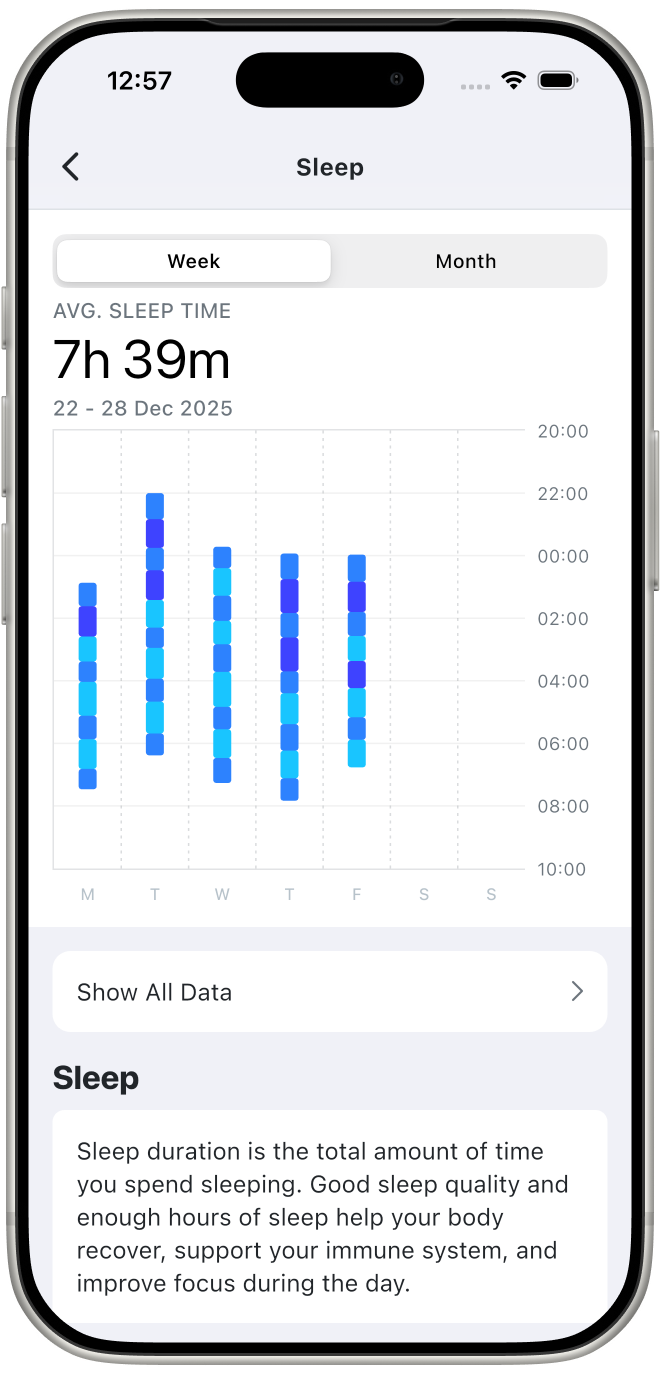
Jak czytać dane o śnie
Aidlab analizuje sen na podstawie kilku sygnałów jednocześnie.
Zobaczysz m.in.:
- fazy snu w czasie
- częstość oddechu
- ruch i pozycję
- tętno i HRV
- opcjonalnie: chrapanie i kaszel
Najwięcej mówi porównanie kilku nocy, a nie pojedynczy wynik.
Co dokładnie śledzimy
Fazy snu Pokazują, jak wygląda struktura snu w czasie — nie tylko jeden wynik końcowy.
Pozycja ciała Pozwala zobaczyć, czy zmiana pozycji wpływa na komfort snu.
Chrapanie i kaszel Jeśli włączone, Aidlab wykrywa je na podstawie dźwięku.
Częstość oddechu Mierzona z klatki piersiowej, co daje stabilniejszy i dokładniejszy sygnał w nocy.
Oddech w nocy jest szczególnie przydatny, bo warunki są bardziej powtarzalne niż w ciągu dnia. W ciągu dnia częstość oddechu mocno zależy od ruchu, rozmowy, stresu i wysiłku. Podczas snu łatwiej zauważyć, czy wynik nagle odbiega od Twojego zwykłego trendu.
Wyższa niż zwykle nocna częstość oddechu może wiązać się z większym obciążeniem organizmu, słabszą regeneracją, infekcją, wpływem alkoholu, intensywnym treningiem albo gorszymi warunkami snu. Pojedyncza noc rzadko wystarcza do wniosków — najwięcej mówią zmiany z kilku kolejnych nocy.
Ważne
- Aidlab nie jest wyrobem medycznym
- nie diagnozuje zaburzeń snu (np. bezdechu)
- jeśli masz objawy, skonsultuj się z lekarzem