

Learn how to measure HRV consistently, compare ECG-derived HRV with PPG-derived pulse variability, and interpret RMSSD and SDNN without universal cutoffs.
Heart rate variability, or HRV, describes variation in the time between consecutive heartbeats. It is not the variation in heart rate from minute to minute, and it is not a score that should be as high as possible.
Short answer: measure HRV with reliable beat-to-beat intervals, under repeatable conditions, and compare the same metric with your own baseline. A five-minute resting ECG is a widely used reference protocol. PPG wearables can be convenient for trends at rest, but pulse-rate variability derived from PPG is not automatically interchangeable with ECG-derived HRV.
How to measure HRV consistently
For a practical short-term measurement:
- Use the same device and the same metric each time.
- Measure at a similar time of day, before introducing changing factors such as exercise or caffeine.
- Use the same posture, usually seated or lying down, and settle quietly before recording.
- Record for five minutes when practical. Do not compare measurements with different durations as if they were equivalent.
- Stay still and breathe normally unless a specific protocol tells you to control breathing.
- Review signal quality and remove artifacts or abnormal beats according to a defined method.
- Compare the result with your own rolling baseline, not a universal table from the internet.
Consistency does not eliminate every source of variation, but it makes changes easier to interpret. Posture, breathing, time of day, recent exercise, sleep, alcohol, illness, medication, and recording artifacts can all affect the result.
ECG vs PPG for HRV
| ECG-derived HRV | PPG-derived pulse-rate variability | |
|---|---|---|
| Signal | Electrical activity of the heart | Changes in peripheral blood volume detected optically |
| Beat timing | R peaks and corrected NN intervals | Pulse-wave peaks or pulse intervals |
| Main advantage | Direct beat timing and access to ECG morphology for artifact review | Convenient, compact, and suitable for passive measurements |
| Main limitation | Electrode contact and movement can distort the ECG | Motion, skin contact, perfusion, and pulse-transit timing affect the signal |
| Best-supported use | Controlled HRV measurement and research requiring beat-level review | Device-specific trend monitoring, especially during rest or sleep |
PPG can agree well with ECG in some resting protocols and devices. That does not make every optical reading equivalent to HRV. The pulse reaches the wrist or finger after the heart's electrical activation, and that transit time can vary. Recent studies therefore distinguish pulse-rate variability, or PRV, from ECG-derived HRV.
The practical rule is not "PPG is useless". It is: do not mix methods, devices, body positions, durations, or metrics and then interpret the difference as a physiological change.
What ECG vs PPG studies actually found
The size of the difference depends on the device and protocol. Three useful comparisons show the range:
| Study and protocol | Result | Practical meaning |
|---|---|---|
| 31 healthy adults; Polar OH1 optical sensor vs Polar H10 chest ECG during five-minute lying and sitting measurements | Supine agreement was strong: ICC 0.955 for RMSSD and 0.980 for SDNN. Seated agreement fell to 0.834 and 0.921. Mean biases ranged from -2.1 to -8.1 ms | PPG can track ECG closely at rest, but posture and metric still change the gap |
| 931 adults across healthy and disease groups; simultaneous ECG and finger PPG | PPG systematically underestimated RMSSD and SDNN. In the cardiovascular group, the mean SDNN difference was 8.50 ms; in the neurological group it was 11.84 ms | A PRV value should not be dropped into an ECG-HRV reference range as if the methods were identical |
| 54 adults standing at rest; PPG sampled at different rates and compared with ECG-derived intervals | About 100 to 200 Hz was needed to keep average PRV bias below 2%; 40 to 50 Hz was enough only for a much wider 20% limit | Sampling rate is not a minor specification when precise beat-to-beat timing matters |
ICC describes agreement across people, not the error of one individual reading. A high ICC can coexist with a bias of several milliseconds. For longitudinal tracking, the strongest setup is therefore the one you can repeat with the same sensor, posture, duration, and processing method.
What are RR and NN intervals?
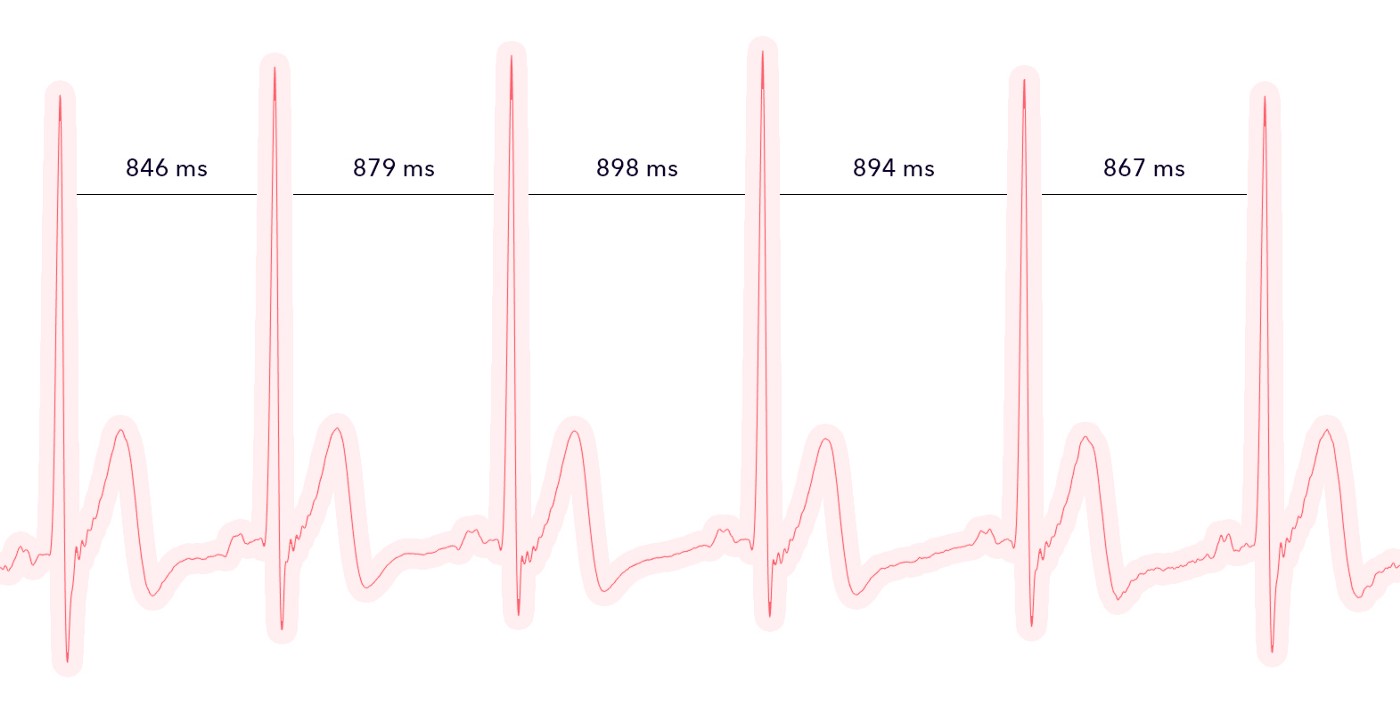 R-R intervals are measured between successive R peaks. HRV analysis commonly uses corrected normal-to-normal intervals.
An ECG waveform contains a prominent QRS complex for each ventricular depolarization. The distance in milliseconds between successive R peaks is the RR interval.
Raw RR intervals may include missed detections, movement artifacts, premature beats, or other rhythm changes. Many HRV analyses therefore use NN intervals: intervals between normal beats after a documented correction process. A perfectly calculated metric from uncorrected artifacts can still be misleading.
For research, retain the raw ECG when possible. It lets you check whether an unusual HRV result came from physiology, poor contact, movement, or beat-detection errors. A stream of intervals without the underlying waveform is harder to audit.
RMSSD vs SDNN
RMSSD and SDNN answer different questions and depend on the recording protocol.
RMSSD is the root mean square of successive differences between normal intervals. It emphasizes short-term beat-to-beat changes and is commonly used for short resting measurements.
SDNN is the standard deviation of normal intervals across the recording. It reflects the total variability present in that recording and depends strongly on duration. A five-minute SDNN and a 24-hour SDNN are not comparable reference values.
| Metric | What it summarizes | Important limitation |
|---|---|---|
| RMSSD | Successive beat-to-beat variation | Sensitive to artifacts and abnormal beats |
| SDNN | Overall variation within the recording | Strongly dependent on recording duration |
Use the same metric for repeated comparisons. Do not convert one into the other with a generic threshold, and check whether an app reports a raw value, a logarithmic transformation, a score, or a personalized deviation.
What is a good HRV?
There is no single good HRV value for every person. Age, physiology, health, training background, measurement method, posture, duration, and data processing all influence the number.
A result such as 40 ms cannot be labelled "good" or "poor" without knowing whether it is RMSSD or SDNN, how long the recording lasted, how artifacts were handled, and how it compares with that person's usual values.
Use a personal baseline collected under similar conditions. Look for a repeated change rather than reacting to one morning. HRV can add context to recovery or stress tracking, but it does not identify the cause of a change and does not diagnose overtraining, illness, or a heart condition.
When is HRV useful?
HRV is most useful when the measurement leads to a clearly defined comparison:
- following a personal recovery trend under consistent conditions;
- comparing phases of a research protocol;
- studying the relationship between beat timing, breathing, sleep, or activity;
- checking whether a change remains visible across several measurements.
It is less useful when different devices and protocols are mixed, signal quality is hidden, or every short-term fluctuation triggers a conclusion.
Measuring HRV with Aidlab 1
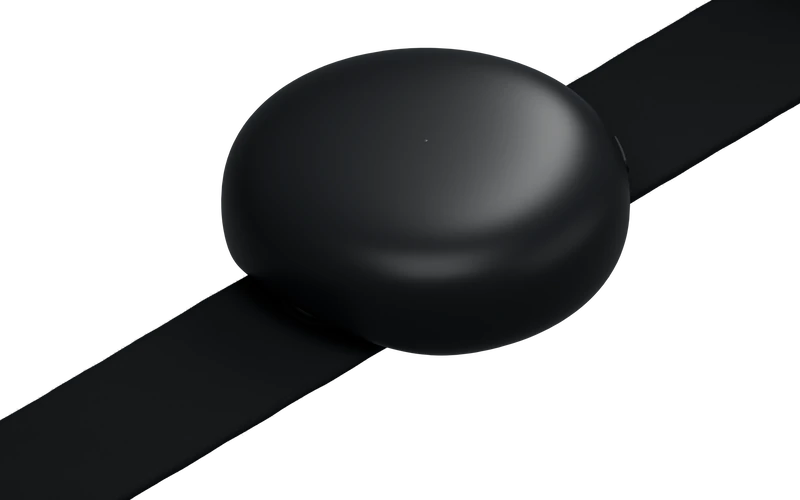
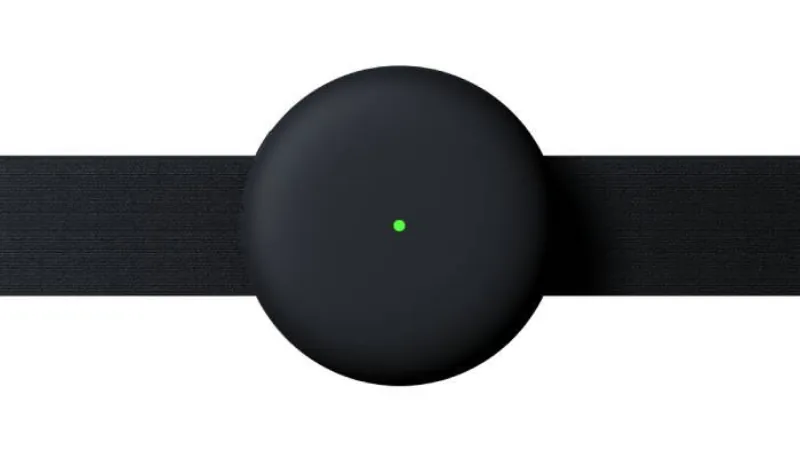
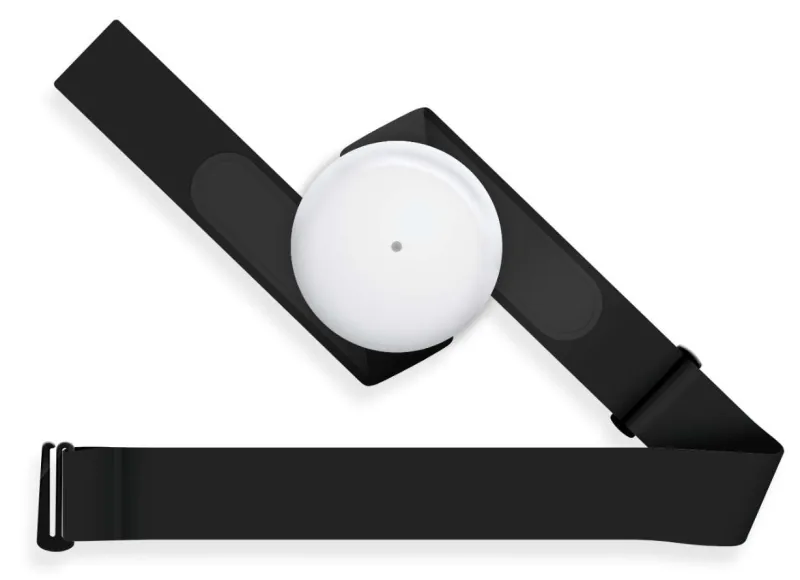
Aidlab 1 records 1-lead ECG from the chest and derives heart rate, RR intervals, and HRV. It also records breathing, skin temperature, movement, and body position, so a researcher or advanced user can review several synchronized signals from the same session.
Aidlab 1 is a wellness and research device, not a medical device. Its ECG and HRV results do not provide a diagnosis. Aidlab 2 is a separate next-generation wellness and research system, while Aidmed One is a separate medical product for professional workflows.
For exercise measurement, read chest strap vs wrist heart-rate monitor. You can also compare the available signals and workflows in Aidlab vs Polar H10.
Common questions
How long should an HRV measurement last?
Five minutes is a widely used duration for comparable short-term HRV recordings. Shorter protocols exist, but their validity depends on the metric, device, population, and purpose. Do not compare recordings of different lengths without a method that supports it.
Should HRV be measured while sitting or lying down?
Either posture can be used in a defined protocol, but posture changes HRV. Choose one position and keep it consistent across measurements.
Is higher HRV always better?
No. HRV should be interpreted relative to the person, metric, recording length, and context. Very high or abrupt values can also result from artifacts, abnormal beats, or analysis errors.
Can a smartwatch measure HRV?
Many watches estimate variability from optical pulse data, and some record short single-lead ECGs. Check which signal, metric, duration, and artifact handling the device uses. Optical PRV may track ECG-derived HRV in some resting conditions, but the methods are not universally interchangeable.
Sources
- Task Force standards for HRV measurement and interpretation
- Recommendations for HRV experiment planning and reporting
- Pulse-rate variability is not the same as ECG-derived HRV
- Review of PPG pulse-rate variability against ECG
- Polar OH1 PPG compared with Polar H10 ECG in 31 adults
- PPG sampling rate and pulse-rate variability bias
- Aidlab intended use and safety