
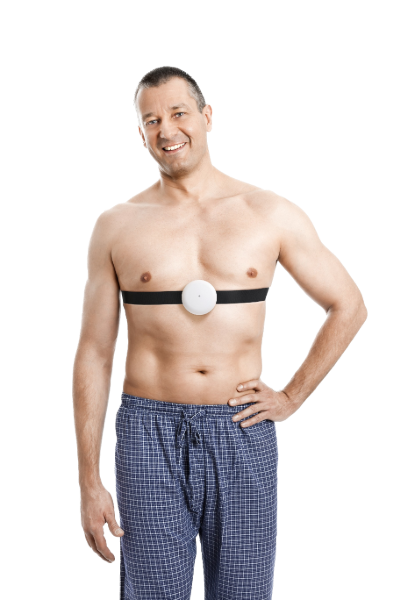
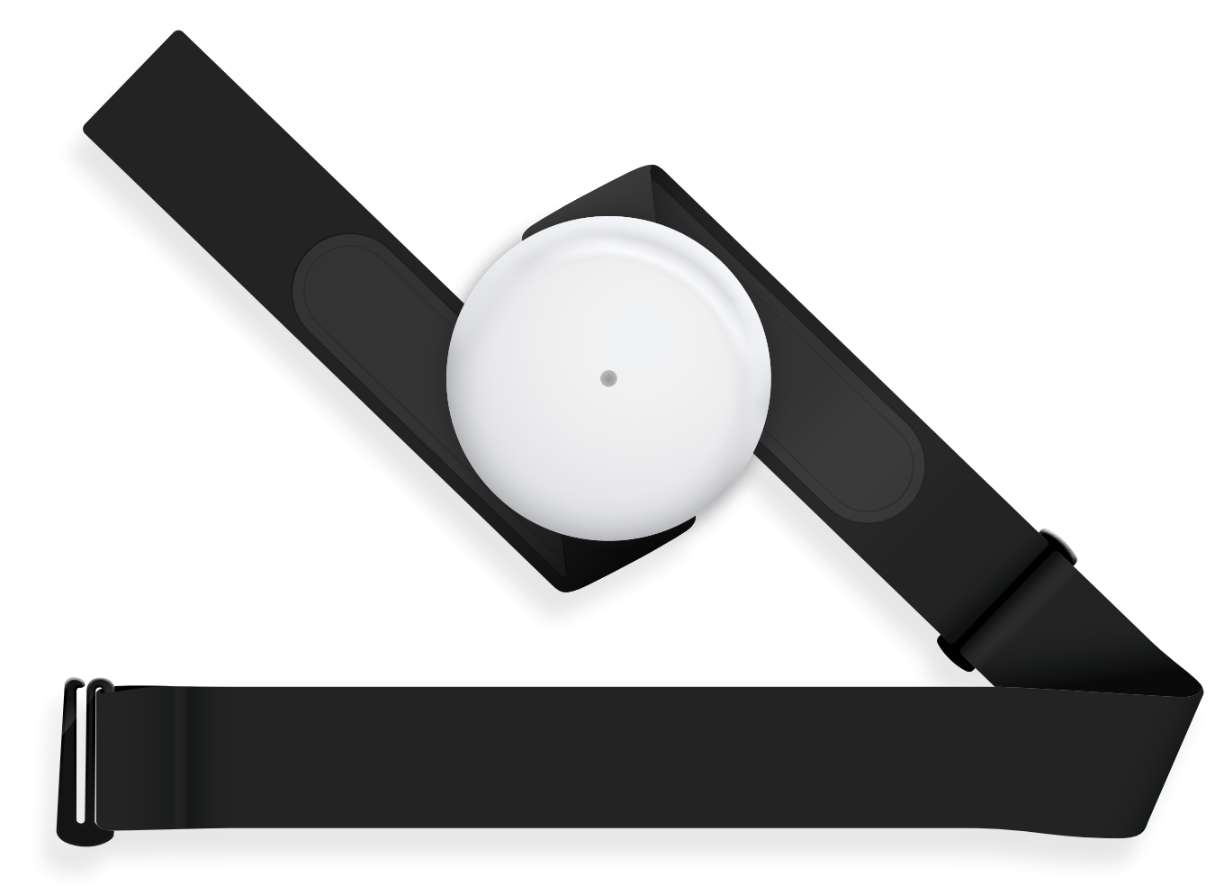
Aidmed One is a medical device designed to collect and analyze patient's physiological parameters.
AidmedOne
7 sensors in one device.
AidmedCloud
Manage your clinic from anywhere. With insightful overviews and flexible tools, you can design specific patient care pathways and build rich reports.
Create accountAidmedHealth
Patient's companion app supports data transmission and filling scheduled questionnaires.
Download appHow it works
One workflow for the clinic and a simple process for the patient.
Patient
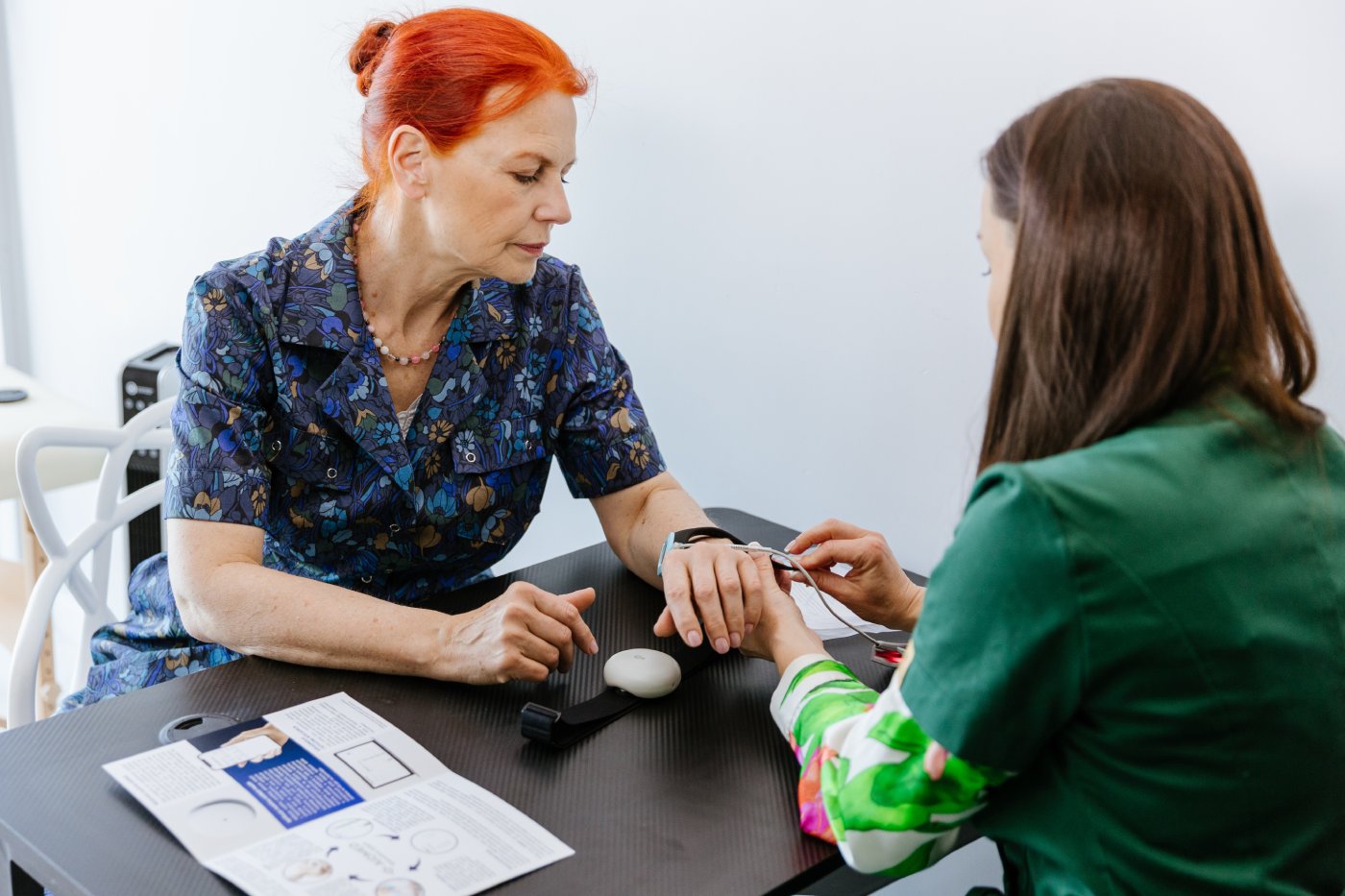
- 1Visit your doctor.
- 2Enter your phone number at registration.
- 3Read the code from the received SMS and enter it in the Aidmed app.
- 4Take measurements according to the schedule agreed upon with your doctor.
- 5Read and control your results on the app.
Physician
- 1Register clinic and your staff at app.aidmed.ai.
- 2Add patient and lend the Aidmed One.
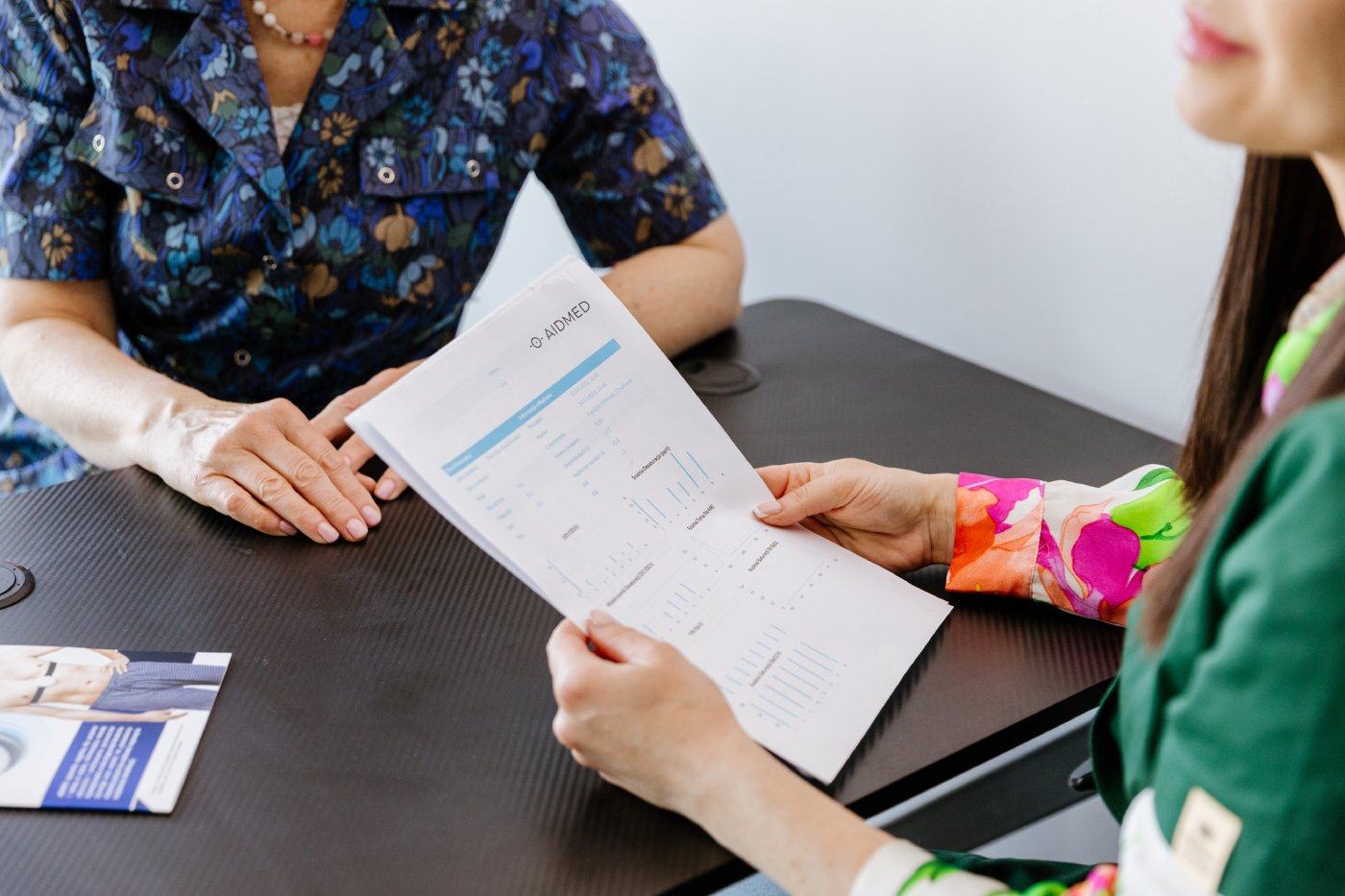
- 3Receive smart reports with aggregate information about your patient.
- 4Annotate the collected signals and alerts.
- 5Generate final report.
Case study


Available reports
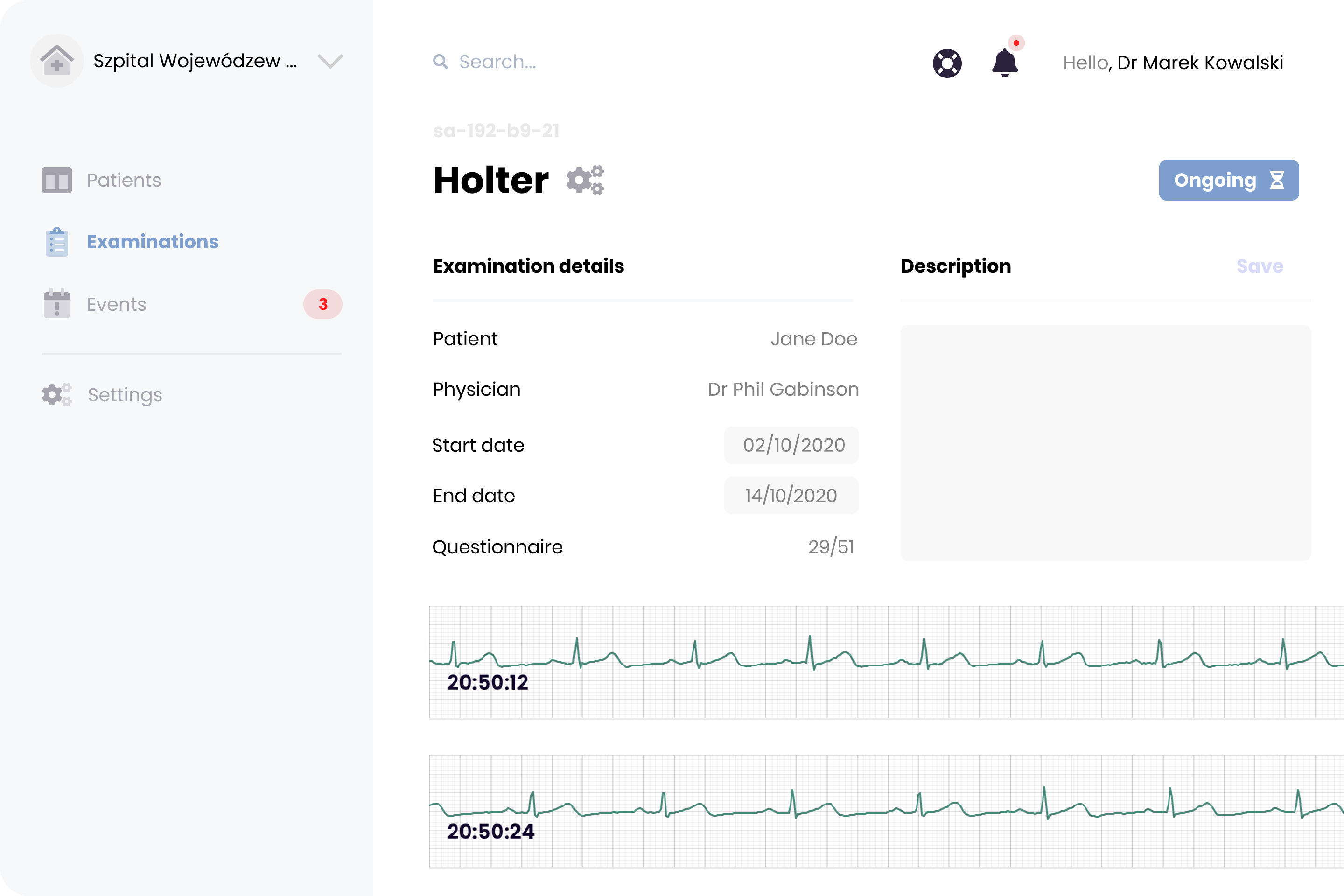
Electrocardiogram
The ECG report organizes heart recordings and helps move from raw data to readable analysis quickly.
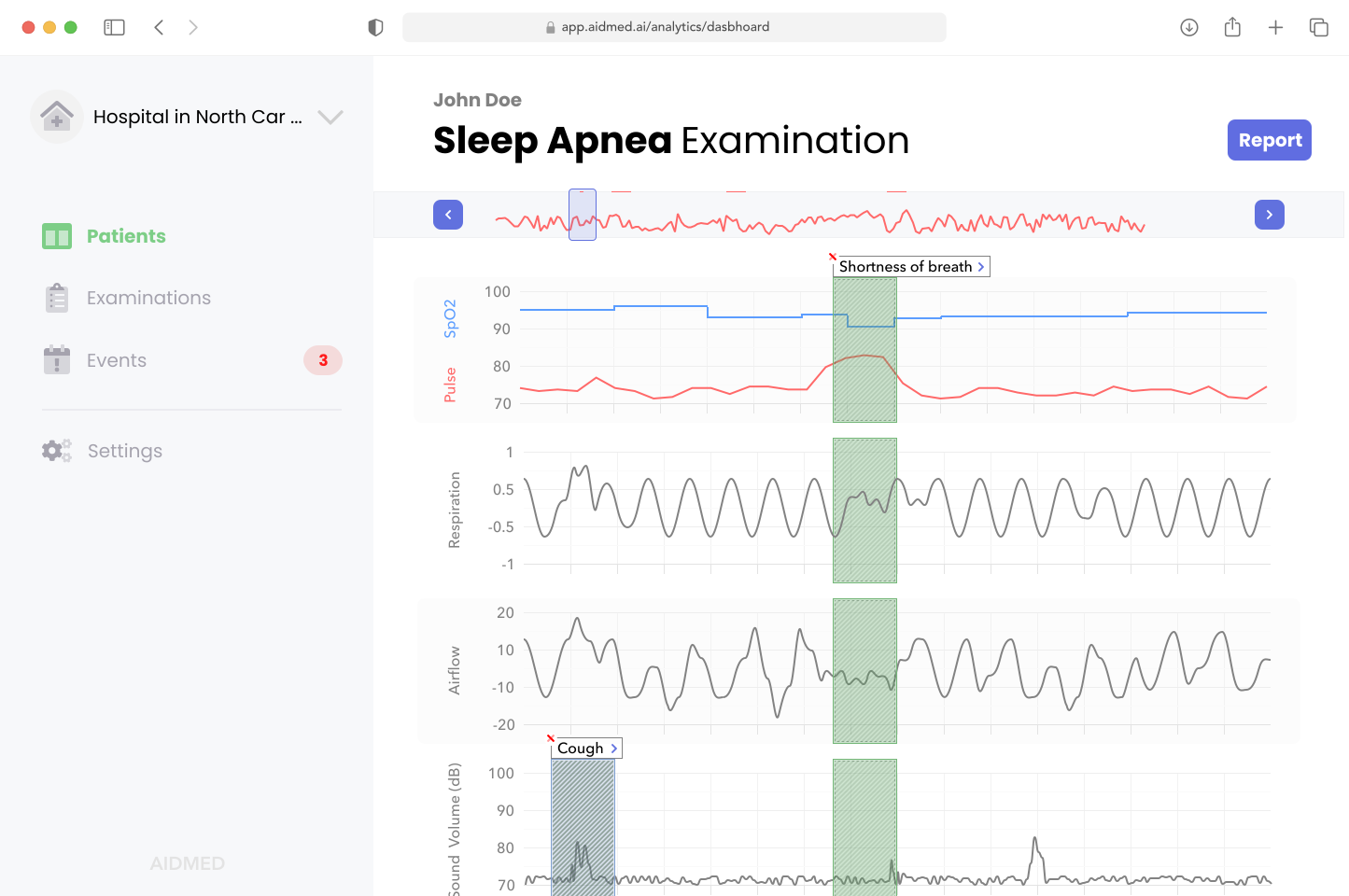
Sleep apnea
The sleep report combines respiration, oxygen saturation, and night events in one diagnostic view.
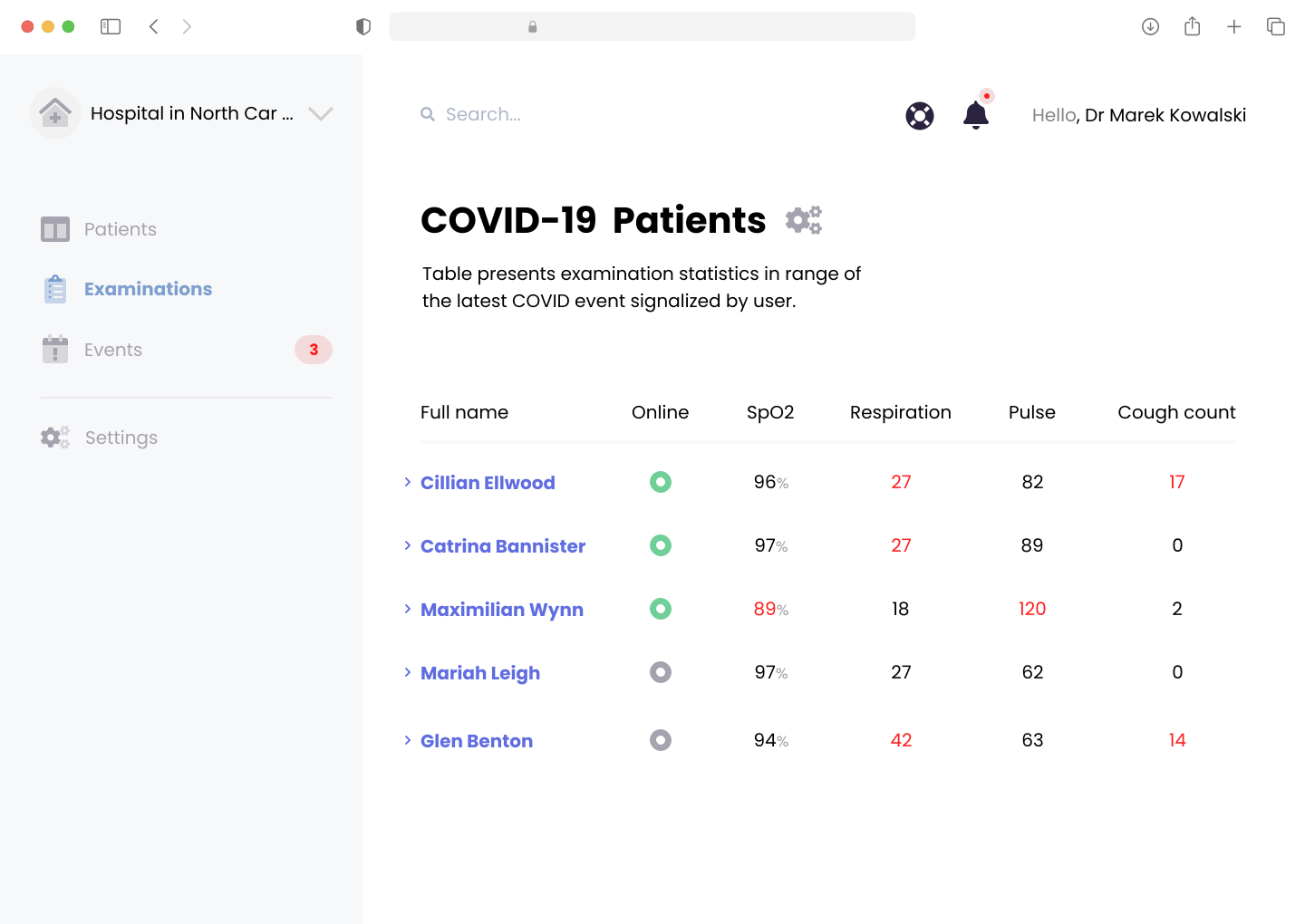
Custom report
A custom report can combine selected signals and notes for a specific care program.
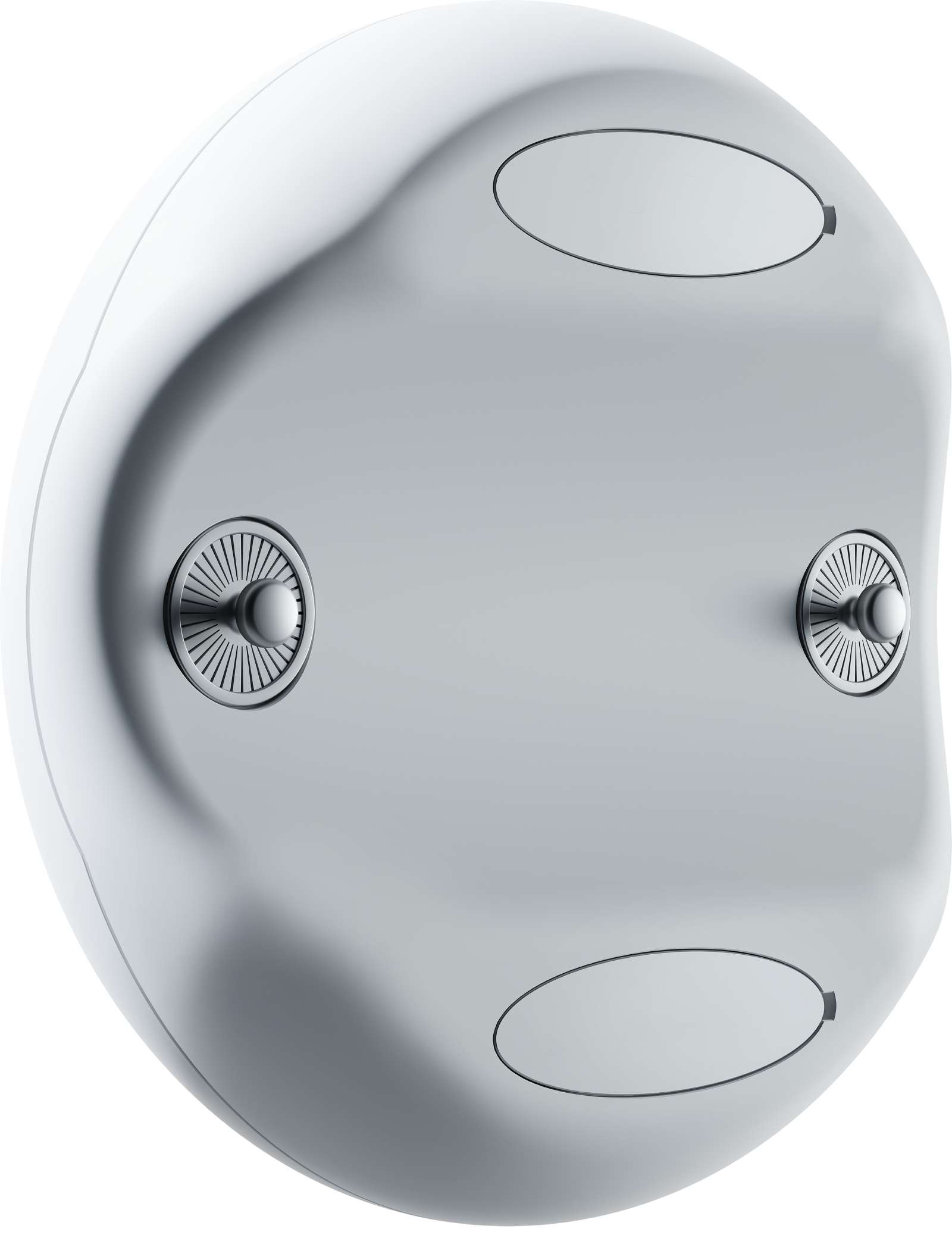
Tap or hover over the pulsing dots to see sensor details
- size
- One size fits all (adjustable) 1
- weight
- 49 g
- dimension
- 68 × 65 × 21 mm
- battery
- 1200 mAh, Li-PoUp to 72 hours
- Charge Time
- Up to 3 hours
- sensors
- 1-Lead ECG SensorSkin Temperature SensorChest Movements SensorMotion Tracking SensorMicrophoneNasal/Oral Respiratory Sensor
- compatibility
- iOS 15 or higherAndroid 12 or higherWindows 10 or highermacOS 13 or higherDebian 10 or higher
- CONNECTIVITY
- Bluetooth 4.0+Micro-USB (only for charging)
- INTERFACE
- Power and connectivity LED indicator
- LANGUAGES
- English, Polish, German, Italian, Spanish, Greek, French
Example use-cases
To assess the relationship of recorded heart rhythm disturbances to sleep-disordered breathing, which is essential for the correct choice of appropriate treatment of rhythm disturbances.
For monitoring patients with suspected sleep-disordered breathing (SDB), particularly obese patients or those with associated conditions such as chronic obstructive pulmonary disease (COPD), treatment-resistant hypertension, or post-stroke status.
Analyze the correlation of reported symptoms (such as palpitations, irregular heartbeat, shortness of breath, dizziness, fainting, loss of consciousness, fatigue) with the presence of arrhythmias and make a preliminary assessment of the type of arrhythmia.
In the diagnosis of atrial fibrillation (AF); both in patients reporting symptoms suggestive of AF and in asymptomatic patients at high risk for this arrhythmia.
To evaluate arrhythmias and to differentiate between atrial fibrillation, arrhythmias of supraventricular and ventricular origin and, in case of bradyarrhythmias, to differentiate between sinus node automatic failure and atrioventricular conduction disturbances.
How it works
Apnea detector
The apnea and deflation detector detects declines in airflow through the cannula. In combination with other signals, our solution allows not only to diagnose but also to guide the patient more effectively in the therapeutic process.
Arrhythmia detector
Telemedicine sensors and detectors trained with machine learning techniques are useful not only for diagnosis but also for the quantitative assessment of arrhythmia severity, assisting therapeutic decisions and treatment evaluation.
Ready to change your clinic experience?
Get in touch or create an account.
1. Not suitable for pectus excavatum (sunken chest).